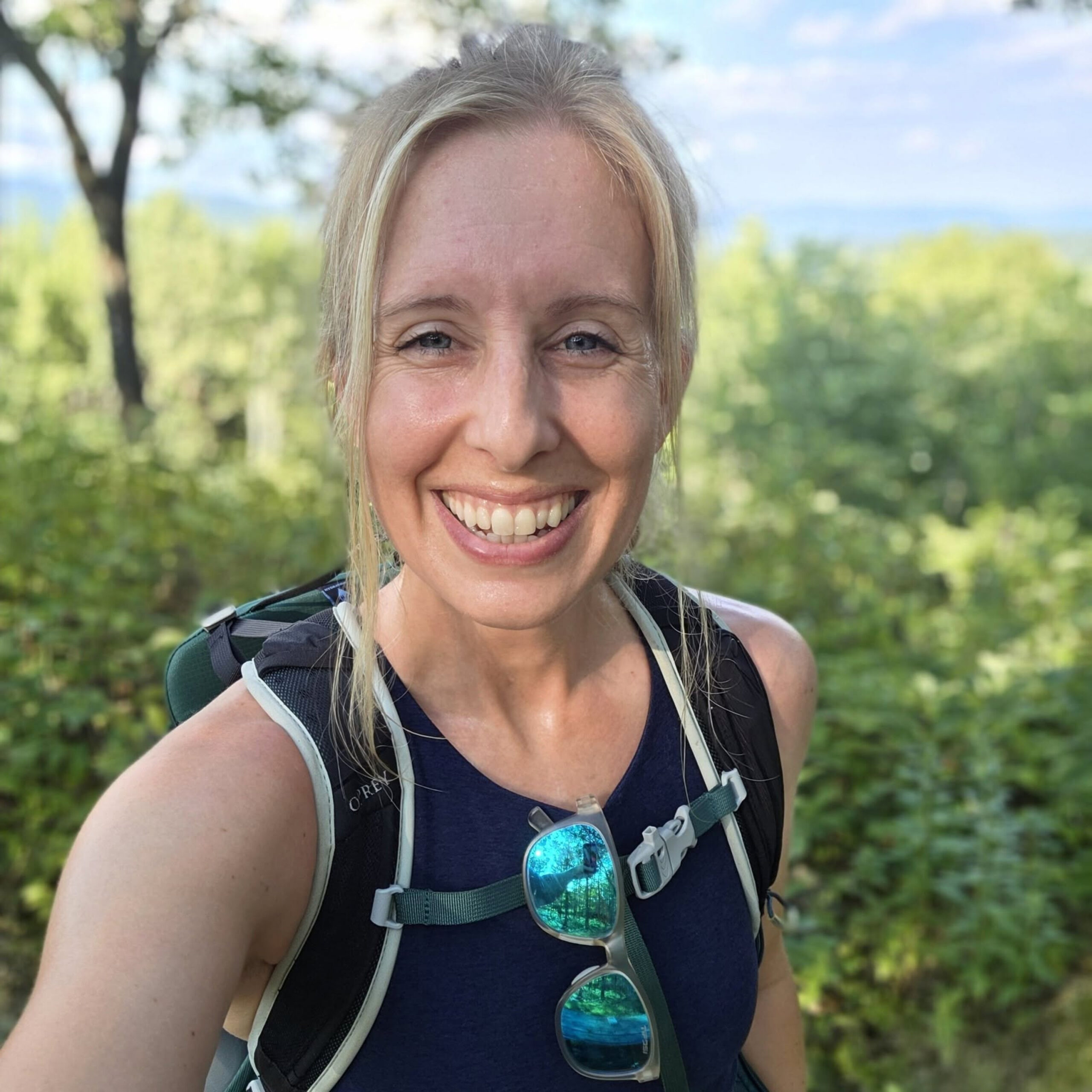
This week on North of Normal: Written & Read, Amanda McKeen reflects on belonging, the role social media plays in our lives, and what we may be missing in our communities.
Follow along below as Amanda reads:
Last week I wrote a piece that I published on North of Normal: Written & Read, and let’s just call it what it was: raw Amanda. I’m wondering if it was too raw for this column, so I’ve chosen not to publish it this week. I’d invite you to check it out at northofnormalpodcast.com. It’s called ‘The Leap the North Country Needs’.
It can sometimes be challenging to determine what to share with the world and what to hold close to my heart. I don’t know that there is a ‘right’ or ‘wrong’ with what to share and when and how. It is merely a choice in how I want readers and listeners to experience me, and ultimately, how I want to feel by sharing it. Sharing without intention would feel reckless and careless.
Having the opportunity to speak to you every week, dear reader, is one of the greatest privileges of my life. I’m honored that you take the time to join me in my thoughts.
I recently sat down with Meghan McPhaul on the North of Normal podcast. It was one of my favorite episodes so far (although I do find myself saying that quite often!) because of the amount of laughter and banter we had together. Meghan used to be a reporter for the Littleton Courier back in the day, when it had a location in Littleton and a full staff. She talked about what that was like, and some of the experiences she had through that role.
There was something Meghan said during our conversation that really buried itself in my brain, and it had nothing to do with her time at the Courier. It had to do with her time living in other places.
At one point I had asked her which location she would pick to move back to today if she had to choose: Colorado or Ireland. And although she put up a tiny fuss at the idea of making such a quick, black and white decision, it didn’t take her long to answer. Ireland.
“What I love about Ireland that I think we’re really missing in American culture is this: it’s not so segregated by age. Everyone hung out at the pub, and it didn’t matter if you were fourteen years old or if you were ninety-two. Everybody was there. It was sort of like the community’s living room.”
As I’m writing this, I’m very aware that we all have different experiences associated with the words ‘living room’. You, reader, were probably immediately transported back to your own living room experiences. Maybe you were a kid. Maybe it was at someone else’s house. Maybe you didn’t have a living room. Or maybe your favorite memory is associated with the living room you’ve now created for yourself.
And what are you feeling right now as you remember?
I feel safe as I remember the familiar textures and patterns of the furniture. I feel calm as I remember the storytelling that went on. I feel happy as I remember that sense of belonging I experienced yet couldn’t put words to as a child. And I feel deeply connected as I remember the people I shared that space with.
If a book were to be written about the last 7 years of my life here in the North Country, I think an appropriate title would be, ‘Amanda and The Great North Search for Belonging’. If I’m being really honest, that title would represent much more than 7 years, but my awareness of this quest has only more recently been made clear.
I have never been shy in talking about what I want for myself. In fact, I’ve been journaling since I was a child, and I recently went back and read a year’s worth of journal entries from when I was 15 years old and living in Costa Rica. That young girl had a lot of inner knowing back then, even if she didn’t know she knew.
Again, I’m speaking of awareness. You and I can know a thing, but not know that we know it! And only through life’s experiences do we suddenly come to really know what we already knew. Hence the word ‘re-member’—literally to put back together the parts of yourself that you have forgotten, returning to the core truth of who you are.
While I was in Costa Rica navigating a world where I didn’t speak the language, understand the culture, or feel in any way that I belonged, the universe gave me a great gift. It was through a group of teenagers who were all in the same situation as I. We were all there because our parents had uprooted us and moved us to another country. We all spoke English and were slowly and painfully learning Spanish. We all had been thrown into the unknown without much warning. We all were still just trying to be kids and have fun.
And fun we had! There was so much laughter and silliness. I look back on that year as one of the best years of my life. And it was because of that group of kids that I shared so many experiences with.
Some of my favorite memories were when we’d gather at someone’s house and hang out in their living room. We’d all just sit wherever there was space: some on couches, some in chairs, some on the floor. It didn’t matter, we were just so happy to be together.
I have never felt so connected to a group of people before or since that time. And as I think about those memories, two familiar feelings bubble up inside me. Acceptance and love. They are, without question, the best feelings a human being can experience.
What I’m starting to piece together is that our need for acceptance and love is the foundation upon which ‘community’ is built. And I’m not speaking of geographic communities. I’m speaking of the psychological sense of community we all carry deep within ourselves. That need to feel connected with others. That desire to feel cared for, accepted, and loved.
I recently read a book called ‘Tribe’ by Sebastian Junger. In it, he talks about this very thing, and how this tribal connection that humanity is built upon is largely lost in modern society.
“Human beings need three basic things in order to be content: they need to feel competent at what they do; they need to feel authentic in their lives; and they need to feel connected to others. These values are considered “intrinsic” to human happiness and far outweigh “extrinsic” values such as beauty, money and status.”
It has officially been two weeks since I removed myself from social media. And the more time I spend away, the more I realize what an absolute lie we’ve been told in referring to being online as being ‘connected’.
Social media is man’s best attempt to manufacture psychological community. And though I realize this will ruffle some feathers, I’m saying it anyway. It is a failed attempt. I would even call it lazy. Our feelings of love and acceptance are too strong a current for that wire. We will always be left wanting for more.
Not only is social media a failed attempt at connection, it is responsible for the incredible destruction happening all around us. A giant crack has been taking shape in our community. Our papers and radio stations are dying. Our businesses face the threat of extinction if they’re not keeping people’s constant attention. Our people are suffering from isolation, fear, and division. Our youth aren’t learning how to make their own decisions. We are filling our minds with other people’s thoughts and forgetting to have our own. Everyone is on their own ‘algorithm’, pushing us further away from each other.
How can we possibly feel connected?
Even more importantly, what will our ‘community’ look like a decade from now?
What we’re all desperately searching for, and what we truly need as human beings, requires effort. It requires intention. It requires thought. All characteristics that have become increasingly hard to find in today’s society.
Rather than beat a dead horse and talk about technology being to blame, or even our world leaders, I want to bring us all back to an important truth.
We create the world we live in. Everything in it is a result of our own choices. We are not victims. We are not powerless. If we want anything to change in the world around us, that change has to start first in our own hearts and minds. It has to start right here where we are. It has to start with you, dear reader, with what you think about and what you do with the time you’ve been given.
I’m thinking about that community living room Meghan mentioned. And rather than say “I wish we had that”, I’m now wondering, “Who will help me make that happen?”
Sebastian Junger said, “If you want to make a society work, then you don’t keep underscoring the places where you’re different—you underscore your shared humanity,”
Dear reader, what will you do to help?
-Amanda